Breeds Working
Rottweiler
Also known as Rottie, Rottweiler Metzgerhund
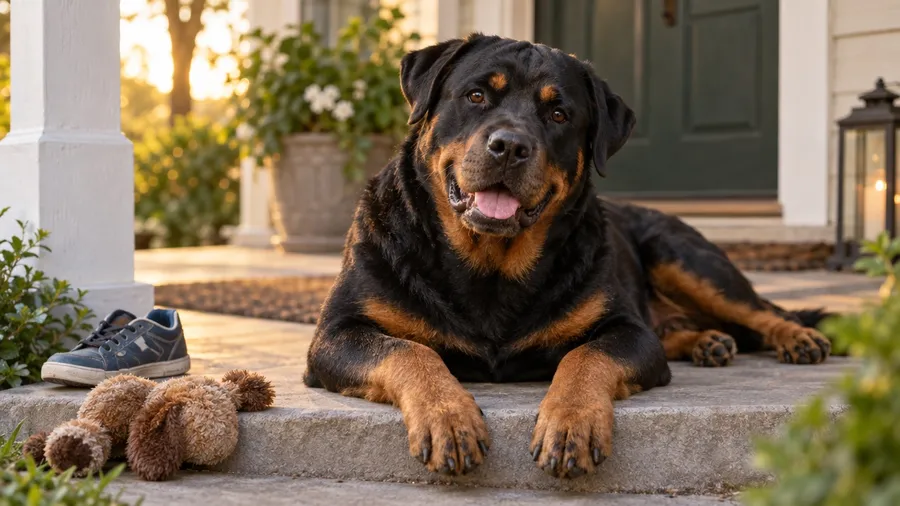
The Rottweiler descends from drover dogs that accompanied Roman armies and later settled around the market town of Rottweil, Germany. There they drove cattle to market and guarded butchers' money and goods. Rottweilers are calm, confident, and deeply loyal companions that are often reserved with strangers and highly trainable.
At a glance
- Origin
- Germany
- Developed
- Roman roots; developed through the Middle Ages
- Bred for
- Driving cattle and guarding; later police, service, and search-and-rescue work
- Height
- 22–27 in
- Weight
- 80–135 lb
- Life span
- 9–10 years
- Size
- Large
- Coat
- Short, coarse, straight double coat; black with rust to mahogany markings
- Grooming
- Low
- Shedding
- Seasonal
- Exercise
- 1–2 hours a day of walks, play, and training
- Recognized by
- American Kennel Club, United Kennel Club, Fédération Cynologique Internationale, Canadian Kennel Club, The Kennel Club (UK)
Good to know
Early, ongoing socialization and clear, consistent training help Rottweilers become steady, well-mannered adults. They thrive with structure, a job, and close involvement with their family. Keep them lean to protect their joints.
Health considerations
- Hip dysplasia
- Elbow dysplasia
- Osteosarcoma
- Subaortic stenosis
Conditions breed clubs commonly screen for. Not every dog will have them. Ask your veterinarian about your own dog.
Did you know?
In Rottweil, the breed was known as the 'Rottweiler Metzgerhund,' or Rottweil butcher's dog.
Working group
Guardians, sled dogs, draft dogs, and rescue dogs. Often large and strong, intelligent, and capable of serious work. Early socialization and consistent training matter.
Every Rottweiler is an individual.
Breed traits are tendencies, not guarantees. Your dog's genetics, early life, health, and everyday experiences all shape who they are. If you'd like help understanding the dog in front of you, let's talk.
Start a conversation