Breeds Herding
Puli
Also known as Hungarian Puli, Hungarian Water Dog
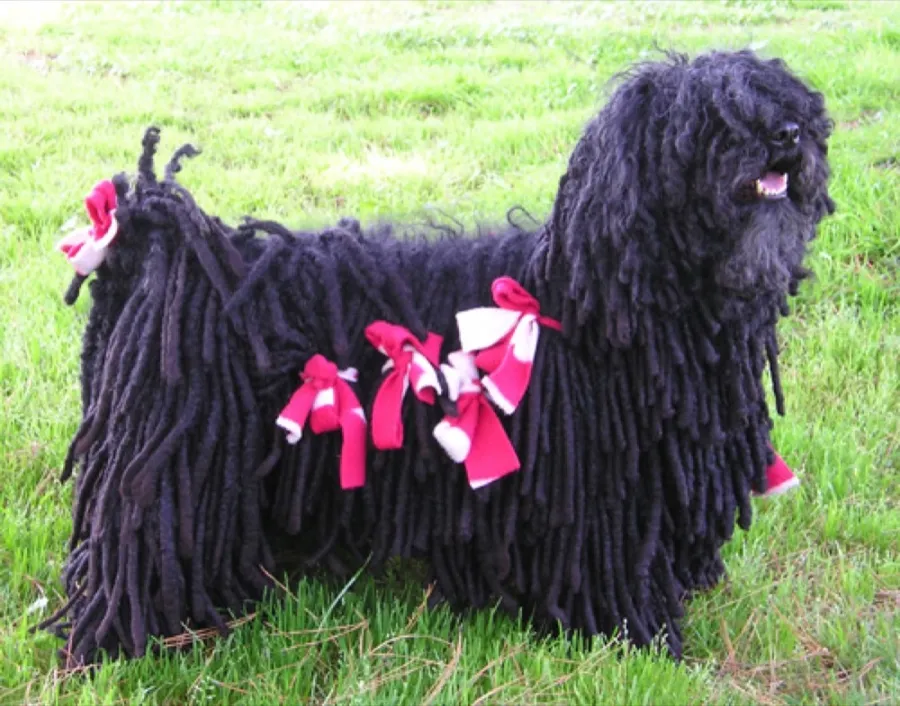
The Puli is thought to have arrived in the Carpathian Basin with the Magyars more than a thousand years ago. Hungarian shepherds valued it as a quick, agile herder that could turn a flock with remarkable speed. Its corded coat is the breed's trademark, and Pulik are known for their loyalty and lively sense of humor.
At a glance
- Origin
- Hungary
- Developed
- Ancient; possibly over 1,000 years
- Bred for
- Herding sheep on the Hungarian plains
- Height
- 16–17 in
- Weight
- 25–35 lb
- Life span
- 10–15 years
- Size
- Medium
- Coat
- Dense, weatherproof coat that forms natural cords; black, rusty black, gray, or white
- Grooming
- High
- Shedding
- Minimal
- Exercise
- About 1 hour a day of walks and play
- Recognized by
- American Kennel Club, United Kennel Club, Fédération Cynologique Internationale, Canadian Kennel Club, The Kennel Club (UK)
Good to know
Forming and maintaining cords takes regular hand-separation, and drying the coat after bathing can take many hours. Pulik are watchful and self-confident, so early socialization and consistent training are valuable.
Health considerations
- Hip dysplasia
- Progressive retinal atrophy
- Degenerative myelopathy
Conditions breed clubs commonly screen for. Not every dog will have them. Ask your veterinarian about your own dog.
Did you know?
The plural of Puli in Hungarian is Pulik.
Herding group
Dogs developed to gather, drive, and protect livestock. Usually intelligent, responsive, and energetic, with a strong instinct to control movement.
Every Puli is an individual.
Breed traits are tendencies, not guarantees. Your dog's genetics, early life, health, and everyday experiences all shape who they are. If you'd like help understanding the dog in front of you, let's talk.
Start a conversation