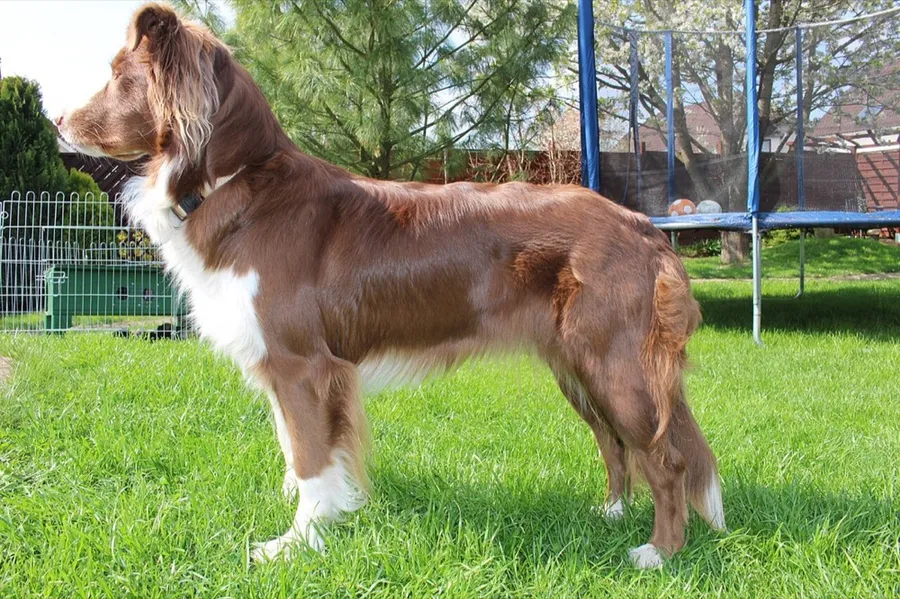
Breeds Herding
Australian Shepherd
Also known as Aussie
Despite its name, the Australian Shepherd was developed in the western United States, likely from dogs that arrived with Basque shepherds and Australian sheep imports. It became a ranch favorite and gained popularity through rodeos, horse shows, and films. Aussies are versatile, quick-learning working dogs that bond closely with their families.
At a glance
- Origin
- United States
- Developed
- 1800s–1900s (developed in the American West)
- Bred for
- Herding livestock on Western ranches
- Height
- 18–23 in
- Weight
- 40–65 lb
- Life span
- 12–15 years
- Size
- Medium
- Coat
- Medium-length, weather-resistant double coat; blue merle, red merle, black, or red, with or without white and tan
- Grooming
- Moderate
- Shedding
- Heavy
- Exercise
- 1–2 hours a day, plus training, puzzles, or dog sports
- Recognized by
- American Kennel Club, United Kennel Club, Fédération Cynologique Internationale, Canadian Kennel Club, The Kennel Club (UK)
Good to know
Aussies thrive with daily exercise and structured mental work such as agility, herding, or trick training. Many are reserved with strangers and sensitive to motion, so early socialization and calm exposure to busy environments help. Merle-to-merle breeding carries health risks, and some lines carry the MDR1 drug-sensitivity gene, which is worth testing for.
Health considerations
- Hip dysplasia
- Collie eye anomaly
- MDR1 drug sensitivity
- Epilepsy
Conditions breed clubs commonly screen for. Not every dog will have them. Ask your veterinarian about your own dog.
Did you know?
Australian Shepherds became widely known in the mid-1900s through rodeo performer Jay Sisler, whose trick-performing Aussies appeared in shows and films.
Herding group
Dogs developed to gather, drive, and protect livestock. Usually intelligent, responsive, and energetic, with a strong instinct to control movement.
Every Australian Shepherd is an individual.
Breed traits are tendencies, not guarantees. Your dog's genetics, early life, health, and everyday experiences all shape who they are. If you'd like help understanding the dog in front of you, let's talk.
Start a conversation