Breeds Herding
Mudi
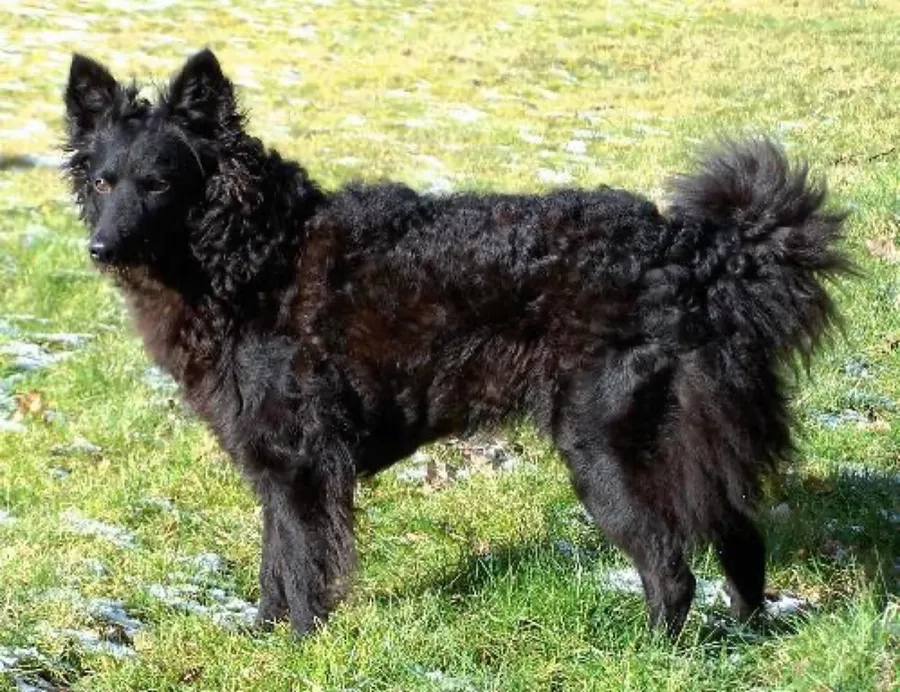
The Mudi is a rare Hungarian farm dog that emerged naturally from crosses among herding breeds and was first described by Dr. Dezső Fényes in the 1930s. It works livestock, guards property, and catches vermin with equal skill. Mudis are quick, adaptable dogs that form strong bonds with their families.
At a glance
- Origin
- Hungary
- Developed
- 1800s; standardized in the 1930s
- Bred for
- Herding sheep and cattle, guarding farms, and catching vermin
- Height
- 15–18.5 in
- Weight
- 18–29 lb
- Life span
- 12–14 years
- Size
- Medium
- Coat
- Wavy to curly, glossy, medium-length coat with short hair on the face and legs; black, white, brown, gray, yellow, or merle
- Grooming
- Low
- Shedding
- Seasonal
- Exercise
- 1 hour or more a day of activity plus training
- Recognized by
- American Kennel Club, United Kennel Club, Fédération Cynologique Internationale, Canadian Kennel Club
Good to know
Mudis are sensitive, alert dogs that may be reserved with strangers, so consistent socialization is important. Their coat is easy to care for, but they need daily exercise and enjoy dog sports.
Health considerations
- Hip dysplasia
- Epilepsy
- Patellar luxation
Conditions breed clubs commonly screen for. Not every dog will have them. Ask your veterinarian about your own dog.
Did you know?
The Mudi nearly vanished after World War II and remains one of the rarest herding breeds in the world.
Herding group
Dogs developed to gather, drive, and protect livestock. Usually intelligent, responsive, and energetic, with a strong instinct to control movement.
Every Mudi is an individual.
Breed traits are tendencies, not guarantees. Your dog's genetics, early life, health, and everyday experiences all shape who they are. If you'd like help understanding the dog in front of you, let's talk.
Start a conversation