Breeds Working
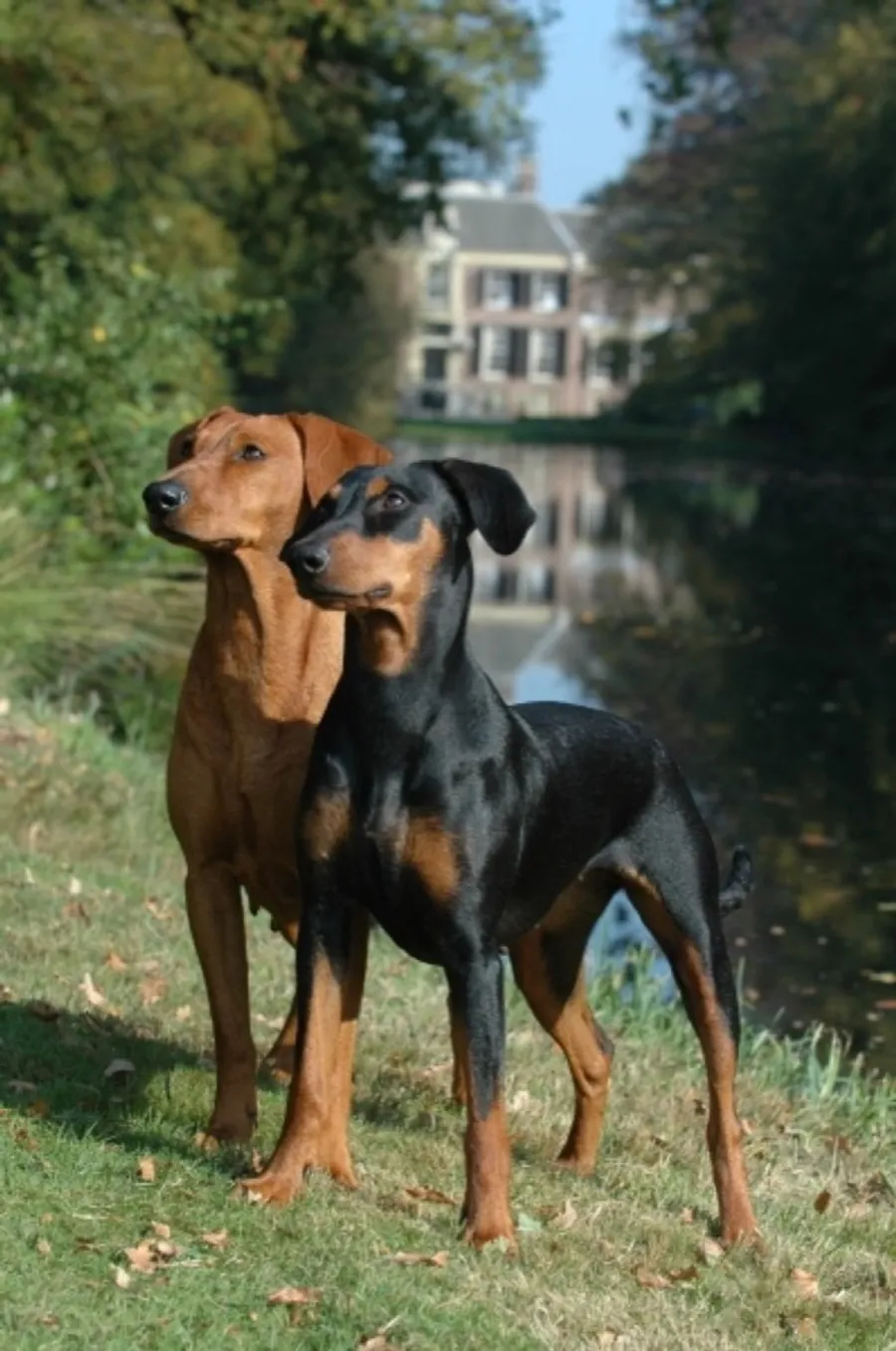
German Pinscher
Also known as Deutscher Pinscher, Standard Pinscher
The German Pinscher is an old German farm breed used to keep barns and stables free of vermin. After World War II the breed nearly died out in Germany and was rebuilt from very few dogs. German Pinschers are lively, clever, and alert, making them keen watchdogs and engaging companions.
At a glance
- Origin
- Germany
- Developed
- 1600s–1800s
- Bred for
- Controlling rats and other vermin on farms and in stables
- Height
- 17–20 in
- Weight
- 25–45 lb
- Life span
- 12–14 years
- Size
- Medium
- Coat
- Short, dense, glossy coat; red, fawn, or black and tan (and blue and tan)
- Grooming
- Low
- Shedding
- Moderate
- Exercise
- About 1 hour a day of brisk activity plus mental challenges
- Recognized by
- American Kennel Club, United Kennel Club, Fédération Cynologique Internationale, Canadian Kennel Club, The Kennel Club (UK)
Good to know
These quick, curious dogs need daily exercise, training, and puzzle-type activities to stay out of mischief. They often have a strong prey drive, so secure fencing and leash use are wise around small animals.
Health considerations
- Hip dysplasia
- Von Willebrand disease
- Hereditary cataracts
- Cardiac conditions
Conditions breed clubs commonly screen for. Not every dog will have them. Ask your veterinarian about your own dog.
Did you know?
The German Pinscher is considered an ancestor of both the Doberman Pinscher and the Miniature Pinscher.
Working group
Guardians, sled dogs, draft dogs, and rescue dogs. Often large and strong, intelligent, and capable of serious work. Early socialization and consistent training matter.
Every German Pinscher is an individual.
Breed traits are tendencies, not guarantees. Your dog's genetics, early life, health, and everyday experiences all shape who they are. If you'd like help understanding the dog in front of you, let's talk.
Start a conversation