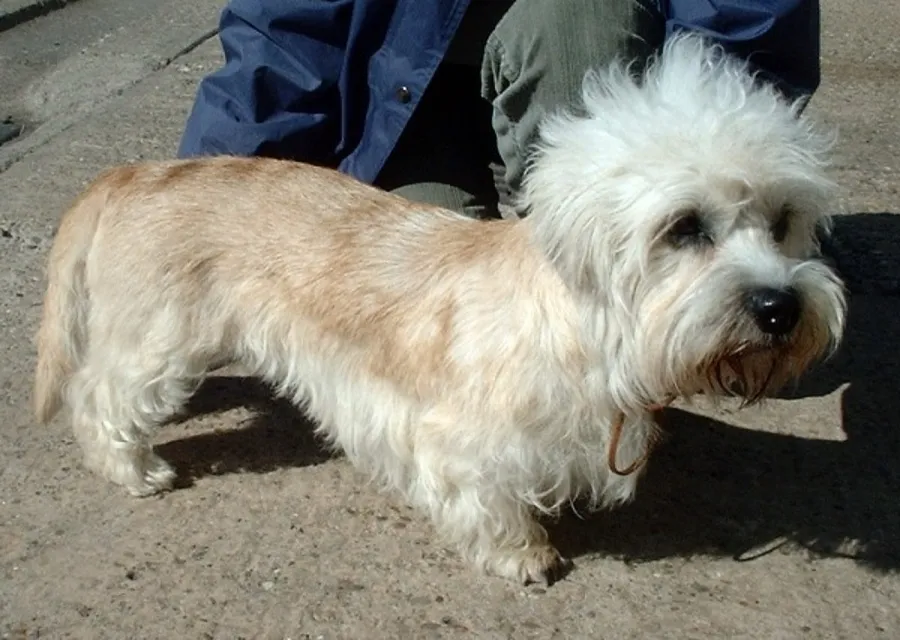
Breeds Terrier
Dandie Dinmont Terrier
Also known as Dandie, Hindlee Terrier
The Dandie Dinmont is the only breed named after a fictional character: Dandie Dinmont, a farmer in Sir Walter Scott's 1815 novel "Guy Mannering" who kept a pack of these terriers. Its long, low body, curved topline, and large domed head with a silky topknot make it unmistakable. Dandies are thoughtful, affectionate, and less frantic than many terriers.
At a glance
- Origin
- Scotland and England (Border region)
- Developed
- 1700s
- Bred for
- Hunting otters, badgers, and foxes
- Height
- 8–11 in
- Weight
- 18–24 lb
- Life span
- 12–15 years
- Size
- Small
- Coat
- Crisp mix of hard and soft hair with a silky topknot; pepper (gray tones) or mustard (brown to fawn tones)
- Grooming
- Moderate
- Shedding
- Minimal
- Exercise
- 30–60 minutes a day of walks and play
- Recognized by
- American Kennel Club, United Kennel Club, Fédération Cynologique Internationale, Canadian Kennel Club, The Kennel Club (UK)
Good to know
Dandies are rare, so finding a responsible breeder may take time. Their long backs benefit from a healthy weight and limited jumping, and their coats need regular brushing and periodic hand-stripping.
Health considerations
- Intervertebral disc disease
- Glaucoma
- Hypothyroidism
Conditions breed clubs commonly screen for. Not every dog will have them. Ask your veterinarian about your own dog.
Did you know?
The two coat colors are known as "pepper" and "mustard," names that also came from Scott's novel, where the dogs were called Peppers and Mustards.
Terrier group
Originally bred to hunt rodents and other vermin, often by digging. Typically energetic, determined, and full of personality, from small Cairns to the tall Airedale.
Every Dandie Dinmont Terrier is an individual.
Breed traits are tendencies, not guarantees. Your dog's genetics, early life, health, and everyday experiences all shape who they are. If you'd like help understanding the dog in front of you, let's talk.
Start a conversation