Breeds Herding
Collie
Also known as Rough Collie, Smooth Collie, Scotch Collie
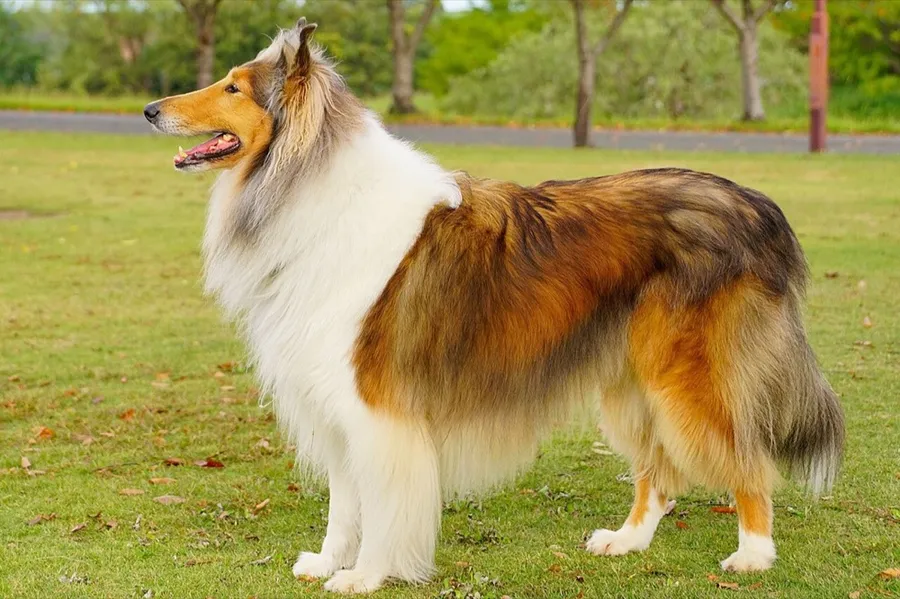
The Collie descends from Scottish herding dogs and rose to popularity after Queen Victoria became an admirer in the 1860s. The breed comes in two coat varieties, rough and smooth. Collies are known for their graceful build, gentle nature, and devotion to family.
At a glance
- Origin
- Scotland
- Developed
- 1800s
- Bred for
- Herding sheep in the Scottish Highlands
- Height
- 22–26 in
- Weight
- 50–75 lb
- Life span
- 12–14 years
- Size
- Large
- Coat
- Rough (long, abundant) or smooth (short, dense) double coat; sable and white, tricolor, blue merle, or white
- Grooming
- Moderate
- Shedding
- Heavy
- Exercise
- About 1 hour a day of walks and play
- Recognized by
- American Kennel Club, United Kennel Club, Fédération Cynologique Internationale, Canadian Kennel Club, The Kennel Club (UK)
Good to know
Collies are sensitive and respond best to calm, patient training. Many carry the MDR1 drug-sensitivity gene, so testing and informing your veterinarian is wise. Rough Collies need regular brushing, especially during seasonal sheds.
Health considerations
- Collie eye anomaly
- MDR1 drug sensitivity
- Progressive retinal atrophy
- Dermatomyositis
Conditions breed clubs commonly screen for. Not every dog will have them. Ask your veterinarian about your own dog.
Did you know?
The fictional Lassie, one of the most famous dogs in film and television, was a Rough Collie, and the role was traditionally played by male dogs.
Herding group
Dogs developed to gather, drive, and protect livestock. Usually intelligent, responsive, and energetic, with a strong instinct to control movement.
Every Collie is an individual.
Breed traits are tendencies, not guarantees. Your dog's genetics, early life, health, and everyday experiences all shape who they are. If you'd like help understanding the dog in front of you, let's talk.
Start a conversation