Breeds Sporting
Sussex Spaniel
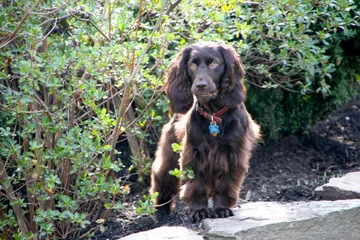
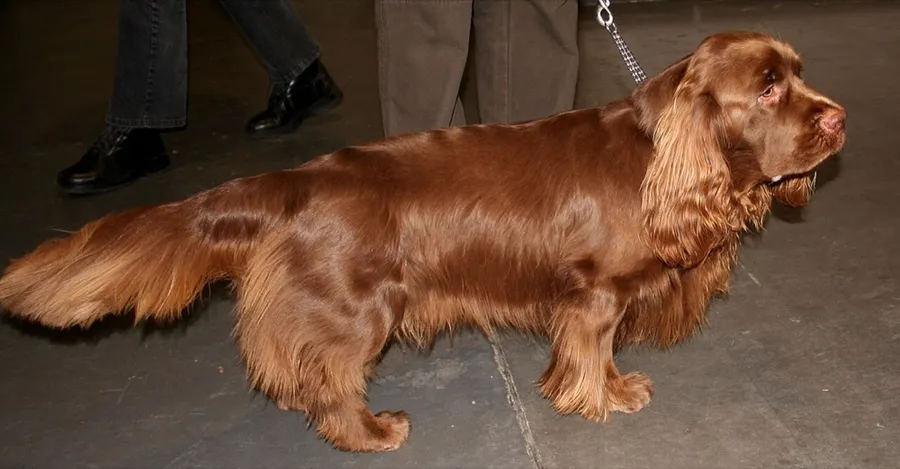
The Sussex Spaniel was developed in Sussex, England, around the late 1700s, with Augustus Elliot of Rosehill Park often credited for early breeding. Its low, sturdy build suited methodical work in thick cover, and it is known for barking or 'giving tongue' when on scent. The breed remains rare but is valued for its calm, amiable temperament.
At a glance
- Origin
- England (Sussex)
- Developed
- Late 1700s
- Bred for
- Flushing game in dense undergrowth, giving voice while working
- Height
- 13–15 in
- Weight
- 35–45 lb
- Life span
- 13–15 years
- Size
- Medium
- Coat
- Abundant, flat or slightly wavy coat with feathering; rich golden liver
- Grooming
- Moderate
- Shedding
- Moderate
- Exercise
- Moderate daily walks and play, about 30–60 minutes
- Recognized by
- American Kennel Club, United Kennel Club, Fédération Cynologique Internationale, Canadian Kennel Club, The Kennel Club (UK)
Good to know
Sussex Spaniels are relatively calm but enjoy daily walks and sniffing. They can be vocal, and their long, low backs benefit from keeping them at a healthy weight.
Health considerations
- Hip dysplasia
- Intervertebral disc disease
- Heart disease
- Pyruvate dehydrogenase phosphatase 1 deficiency (PDP1)
Conditions breed clubs commonly screen for. Not every dog will have them. Ask your veterinarian about your own dog.
Did you know?
A Sussex Spaniel named Stump won Best in Show at Westminster in 2009 at age 10, the oldest dog to win that title at the time.
Sporting group
Retrievers, pointers, setters, and spaniels, developed to help hunters find and retrieve game. Typically active, people-focused, and happiest with regular exercise and a job to do.
Every Sussex Spaniel is an individual.
Breed traits are tendencies, not guarantees. Your dog's genetics, early life, health, and everyday experiences all shape who they are. If you'd like help understanding the dog in front of you, let's talk.
Start a conversation