Breeds Toy
Papillon
Also known as Continental Toy Spaniel, Phalène, Épagneul Nain Continental
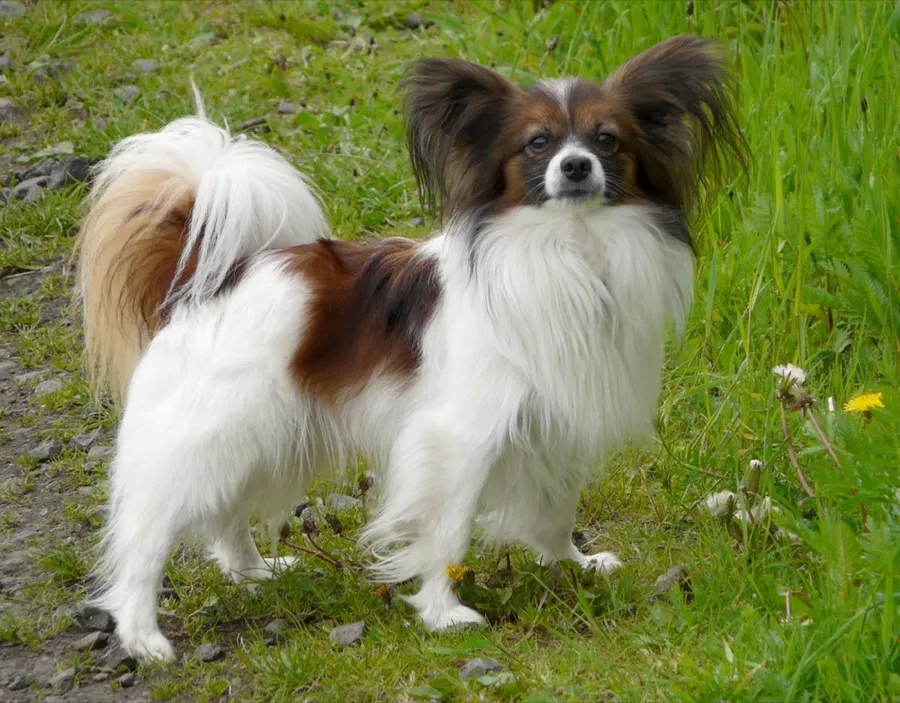
The Papillon descends from the toy spaniels seen in Renaissance paintings of European nobility. It was a favorite in the French and other European courts. Over time, an erect-eared type became popular and gave the breed its name, meaning "butterfly" in French; the drop-eared type is called the Phalène, meaning "moth." Papillons are bright, athletic, and eager to learn.
At a glance
- Origin
- France and Belgium (continental Europe)
- Developed
- 1500s
- Bred for
- Companionship for European nobility
- Height
- 8–11 in
- Weight
- 5–10 lb
- Life span
- 14–16 years
- Size
- Toy
- Coat
- Long, silky, flowing single coat with a plumed tail; white with patches of any color
- Grooming
- Moderate
- Shedding
- Moderate
- Exercise
- About 45–60 minutes a day; many excel at agility and trick training
- Recognized by
- American Kennel Club, United Kennel Club, Fédération Cynologique Internationale, Canadian Kennel Club, The Kennel Club (UK)
Good to know
Papillons are quick learners and thrive on training, games, and dog sports. Their fine bones make them vulnerable to falls and rough play. The coat has no undercoat and is fairly easy to maintain with regular brushing.
Health considerations
- Patellar luxation
- Progressive retinal atrophy
- Dental disease
- Mitral valve disease
Conditions breed clubs commonly screen for. Not every dog will have them. Ask your veterinarian about your own dog.
Did you know?
"Papillon" is French for butterfly, after the breed's large, fringed, upright ears.
Toy group
Small companion breeds, many developed for life alongside people. Small in size but often big in personality; they still need training, enrichment, and gentle handling.
Every Papillon is an individual.
Breed traits are tendencies, not guarantees. Your dog's genetics, early life, health, and everyday experiences all shape who they are. If you'd like help understanding the dog in front of you, let's talk.
Start a conversation