Breeds Terrier
Miniature Schnauzer
Also known as Zwergschnauzer, Mini Schnauzer
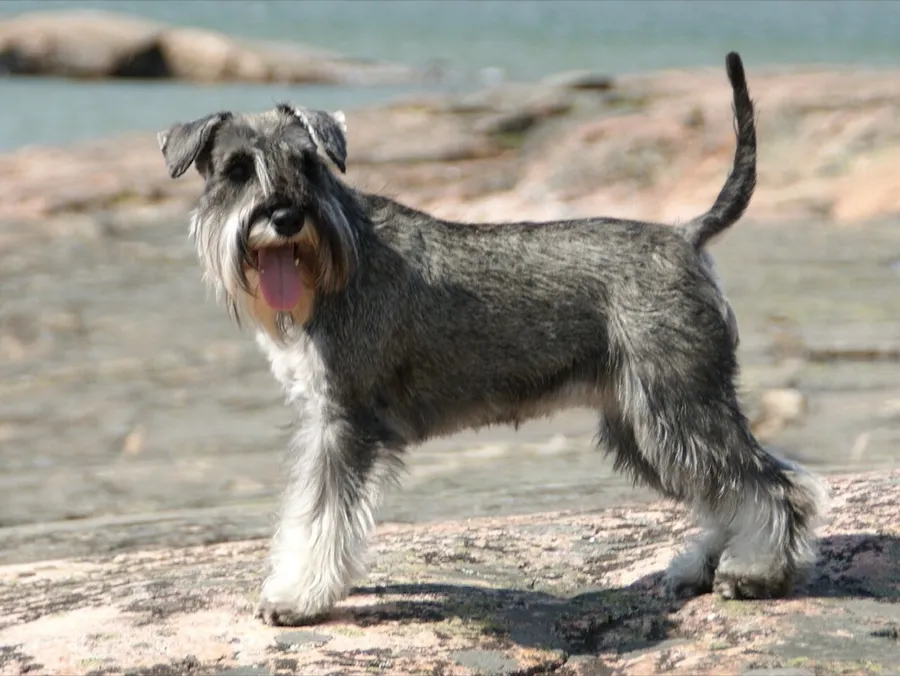
German farmers developed the Miniature Schnauzer by crossing the Standard Schnauzer with smaller breeds such as the Affenpinscher and Poodle to create a compact ratter and farm dog. Its bearded face and bushy eyebrows give it a distinctive, expressive look. Mini Schnauzers are sociable, sturdy, and eager to be involved in family life.
At a glance
- Origin
- Germany
- Developed
- Late 1800s
- Bred for
- Ratting on farms and companionship
- Height
- 12–14 in
- Weight
- 11–20 lb
- Life span
- 12–15 years
- Size
- Small
- Coat
- Hard, wiry double coat with a distinctive beard and eyebrows; salt and pepper, black and silver, or solid black
- Grooming
- High
- Shedding
- Minimal
- Exercise
- 30–60 minutes a day of walks and play
- Recognized by
- American Kennel Club, United Kennel Club, Fédération Cynologique Internationale, Canadian Kennel Club, The Kennel Club (UK)
Good to know
Mini Schnauzers can be vocal watchdogs, so teaching a quiet cue early helps. Their coats need regular brushing and professional grooming every five to eight weeks, and a lower-fat diet is often recommended since they can be prone to pancreatitis.
Health considerations
- Pancreatitis
- Urinary stones
- Hyperlipidemia
- Eye conditions
Conditions breed clubs commonly screen for. Not every dog will have them. Ask your veterinarian about your own dog.
Did you know?
The Miniature Schnauzer is the only one of the three Schnauzer breeds placed in the AKC Terrier Group; the Standard and Giant are in the Working Group.
Terrier group
Originally bred to hunt rodents and other vermin, often by digging. Typically energetic, determined, and full of personality, from small Cairns to the tall Airedale.
Every Miniature Schnauzer is an individual.
Breed traits are tendencies, not guarantees. Your dog's genetics, early life, health, and everyday experiences all shape who they are. If you'd like help understanding the dog in front of you, let's talk.
Start a conversation