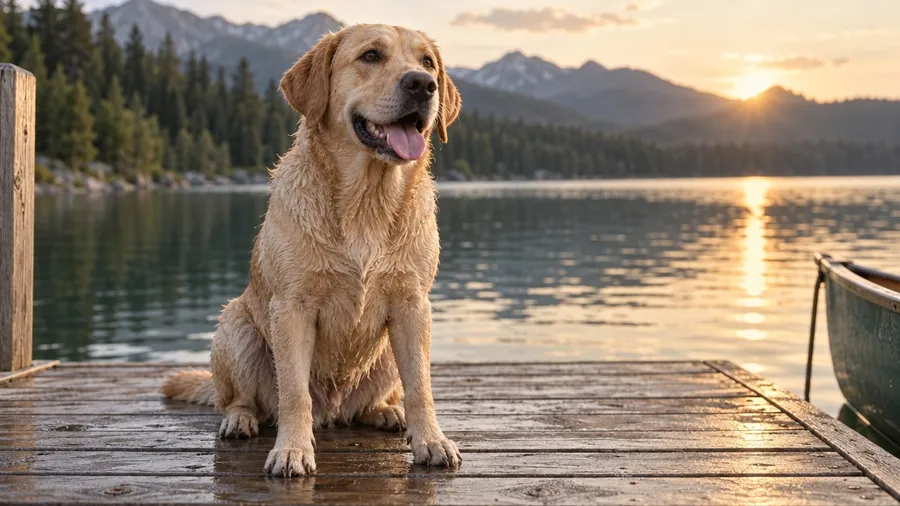
Breeds Sporting
Labrador Retriever
Also known as Labrador, Lab
The Labrador Retriever descends from the St. John's water dog of Newfoundland, which helped local fishermen haul nets and retrieve fish. British nobles imported these dogs in the 1800s and developed them into the modern retriever. Labs are known for their friendly, adaptable nature and are widely used as guide, service, detection, and search-and-rescue dogs.
At a glance
- Origin
- Canada (Newfoundland), developed in Great Britain
- Developed
- 1800s
- Bred for
- Retrieving fishing nets and fish, later retrieving game for hunters
- Height
- 21.5–24.5 in
- Weight
- 55–80 lb
- Life span
- 11–13 years
- Size
- Large
- Coat
- Short, dense, water-resistant double coat; black, yellow, or chocolate
- Grooming
- Low
- Shedding
- Heavy
- Exercise
- 1–2 hours a day, including retrieving, swimming, or other active play
- Recognized by
- American Kennel Club, United Kennel Club, Fédération Cynologique Internationale, Canadian Kennel Club, The Kennel Club (UK)
Good to know
Labs need daily exercise and mental engagement, and they mature slowly, so consistent, fair training from puppyhood is helpful. They tend to gain weight easily, so measure meals and keep them active.
Health considerations
- Hip dysplasia
- Elbow dysplasia
- Exercise-induced collapse
- Progressive retinal atrophy
Conditions breed clubs commonly screen for. Not every dog will have them. Ask your veterinarian about your own dog.
Did you know?
The Labrador Retriever was the most popular breed in the United States by AKC registrations for 31 consecutive years, from 1991 through 2021.
Sporting group
Retrievers, pointers, setters, and spaniels, developed to help hunters find and retrieve game. Typically active, people-focused, and happiest with regular exercise and a job to do.
Every Labrador Retriever is an individual.
Breed traits are tendencies, not guarantees. Your dog's genetics, early life, health, and everyday experiences all shape who they are. If you'd like help understanding the dog in front of you, let's talk.
Start a conversation