Breeds Toy
Japanese Chin
Also known as Japanese Spaniel, Chin
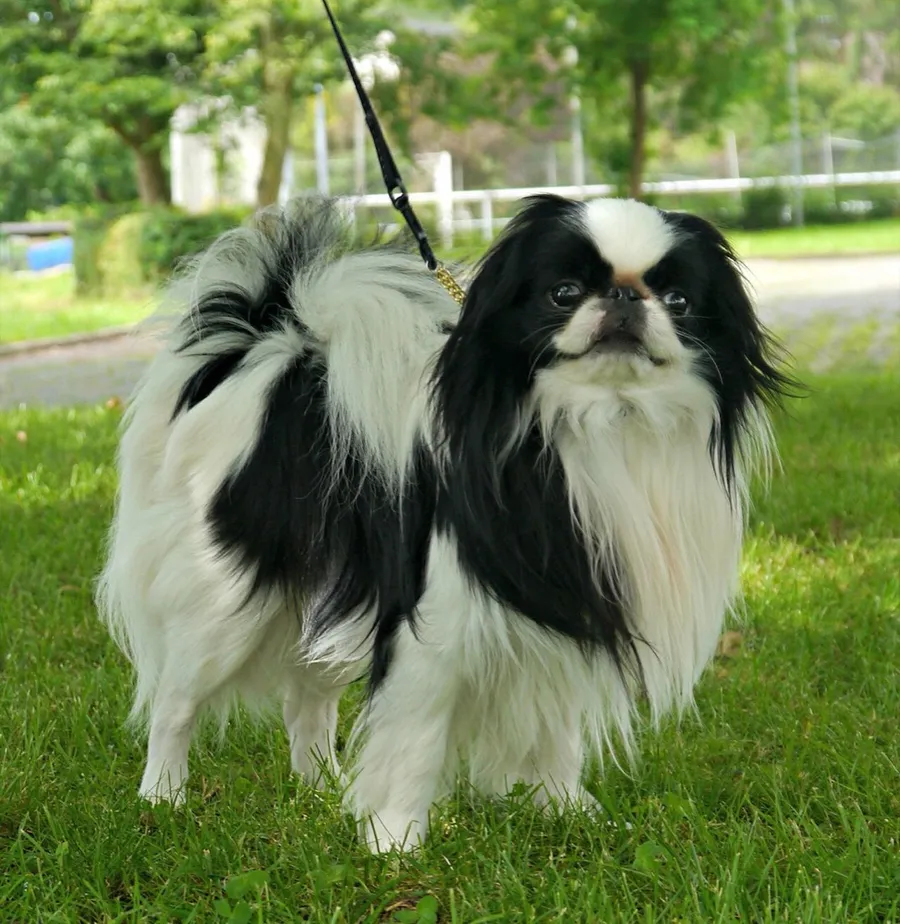
The Japanese Chin's ancestors likely came to Japan from China or Korea, and the breed was cherished by Japanese nobility for centuries. Chins were often given as diplomatic gifts. Western interest grew after Japan opened to trade in the 1850s. The breed is known for its catlike habits, such as washing its face and perching on high places.
At a glance
- Origin
- Japan (ancestors from China or Korea)
- Developed
- Centuries old; documented in Japan by the 1600s
- Bred for
- Companionship for Japanese nobility
- Height
- 8–11 in
- Weight
- 7–11 lb
- Life span
- 10–12 years
- Size
- Toy
- Coat
- Abundant, silky, straight single coat; black and white, red and white, or black and white with tan points
- Grooming
- Moderate
- Shedding
- Moderate
- Exercise
- About 20–30 minutes a day of walks and indoor play
- Recognized by
- American Kennel Club, United Kennel Club, Fédération Cynologique Internationale, Canadian Kennel Club, The Kennel Club (UK)
Good to know
Chins are content with modest exercise and do well in apartments. Their flat faces make them sensitive to heat and strenuous exercise. Gentle handling and calm socialization suit their sensitive nature.
Health considerations
- Patellar luxation
- Heart murmurs
- Cataracts
- Brachycephalic airway syndrome
Conditions breed clubs commonly screen for. Not every dog will have them. Ask your veterinarian about your own dog.
Did you know?
Commodore Matthew Perry is said to have received Japanese Chin as gifts during his 1853–54 expeditions to Japan.
Toy group
Small companion breeds, many developed for life alongside people. Small in size but often big in personality; they still need training, enrichment, and gentle handling.
Every Japanese Chin is an individual.
Breed traits are tendencies, not guarantees. Your dog's genetics, early life, health, and everyday experiences all shape who they are. If you'd like help understanding the dog in front of you, let's talk.
Start a conversation