Breeds Sporting
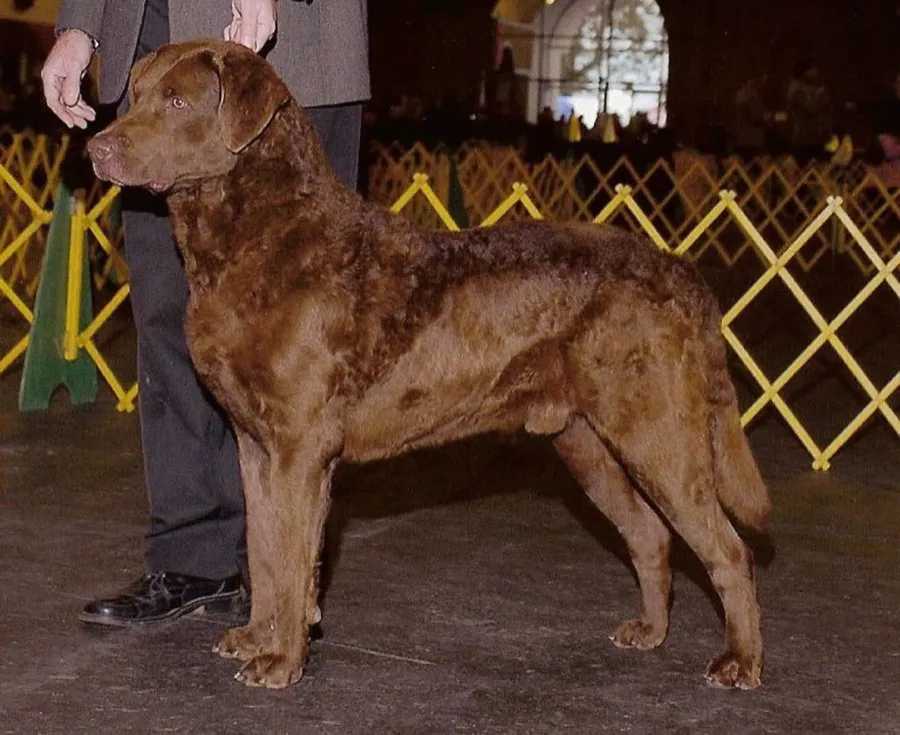
Chesapeake Bay Retriever
Also known as Chessie
The Chesapeake Bay Retriever traces back to two Newfoundland-type puppies rescued from a sinking ship off the Maryland coast in 1807. Local duck hunters crossed their descendants with other retrievers and working dogs to create a powerful dog that could retrieve in icy, choppy water all day. Chessies are devoted to their families and are often reserved with strangers.
At a glance
- Origin
- United States (Maryland)
- Developed
- 1800s
- Bred for
- Retrieving waterfowl in the rough, icy waters of the Chesapeake Bay
- Height
- 21–26 in
- Weight
- 55–80 lb
- Life span
- 10–13 years
- Size
- Large
- Coat
- Short, thick, wavy double coat with an oily, water-resistant outer layer; brown, sedge, or deadgrass
- Grooming
- Low
- Shedding
- Seasonal
- Exercise
- 1–2 hours a day, with swimming and retrieving ideal
- Recognized by
- American Kennel Club, United Kennel Club, Fédération Cynologique Internationale, Canadian Kennel Club, The Kennel Club (UK)
Good to know
Chessies are strong-minded and benefit from early socialization and consistent, fair training. Their oily coat should not be bathed too often, as that strips its natural water resistance.
Health considerations
- Hip dysplasia
- Progressive retinal atrophy
- Degenerative myelopathy
- Exercise-induced collapse
Conditions breed clubs commonly screen for. Not every dog will have them. Ask your veterinarian about your own dog.
Did you know?
The Chesapeake Bay Retriever is the official state dog of Maryland.
Sporting group
Retrievers, pointers, setters, and spaniels, developed to help hunters find and retrieve game. Typically active, people-focused, and happiest with regular exercise and a job to do.
Every Chesapeake Bay Retriever is an individual.
Breed traits are tendencies, not guarantees. Your dog's genetics, early life, health, and everyday experiences all shape who they are. If you'd like help understanding the dog in front of you, let's talk.
Start a conversation